
Toll Road Text Scams Are a Trust Problem. RCS Helps Fix It.

A driver gets a text saying they owe a toll. It looks plausible. It might even reference a real roadway they used. But they hesitate.
Most drivers have seen warnings about toll payment scams , so—too often—they pause or ignore the message instead of paying the toll.
Toll smishing has become widespread across the U.S., targeting drivers with urgent messages and fake payment links that impersonate legitimate toll operators. The industry has responded with public warnings and website alerts. But driver education can't always help drivers decide whether a specific message is real when it pops up on their phone.
In conversations with toll operators, I hear a consistent frustration come up: even when operators communicate responsibly, drivers still aren’t sure what to trust when a text arrives. What happens, then, is legitimate messages go unopened, payments get delayed, and call centers see the fallout.
Toll operators need communication channels that make legitimacy obvious at a glance.
Tolling Is a Prime Target for Smishing
Unlike recurring utility bills or subscription services, toll payments are often episodic and low-context. Drivers don’t always remember when or where they incurred a toll, especially when they travel out of state or pass through unfamiliar roadways. That uncertainty creates a perfect opening for scammers: a message that says “You have an unpaid toll,” even when it’s unexpected, doesn’t feel obviously wrong.
Scammers use the same patterns effective toll operators rely on: urgent notices, payment prompts, and simple calls to action. Once drivers doubt toll texts, toll smishing scams make it more likely that legitimate reminders get ignored and costs rise. The communication channel starts to work against the operator.
What RCS Changes for Toll Operator Communications
How can toll operators restore trust in their communications? With a channel that’s designed to make identity clear and interaction safe: RCS business messaging.
RCS (Rich Communication Services) modernizes business messaging inside the mobile inbox, adding capabilities that standard SMS doesn’t support natively.
For toll operators, RCS introduces verified identity, branded presentation, and guided interaction. Drivers don’t need to download an app, which matters for occasional and out-of-state users.
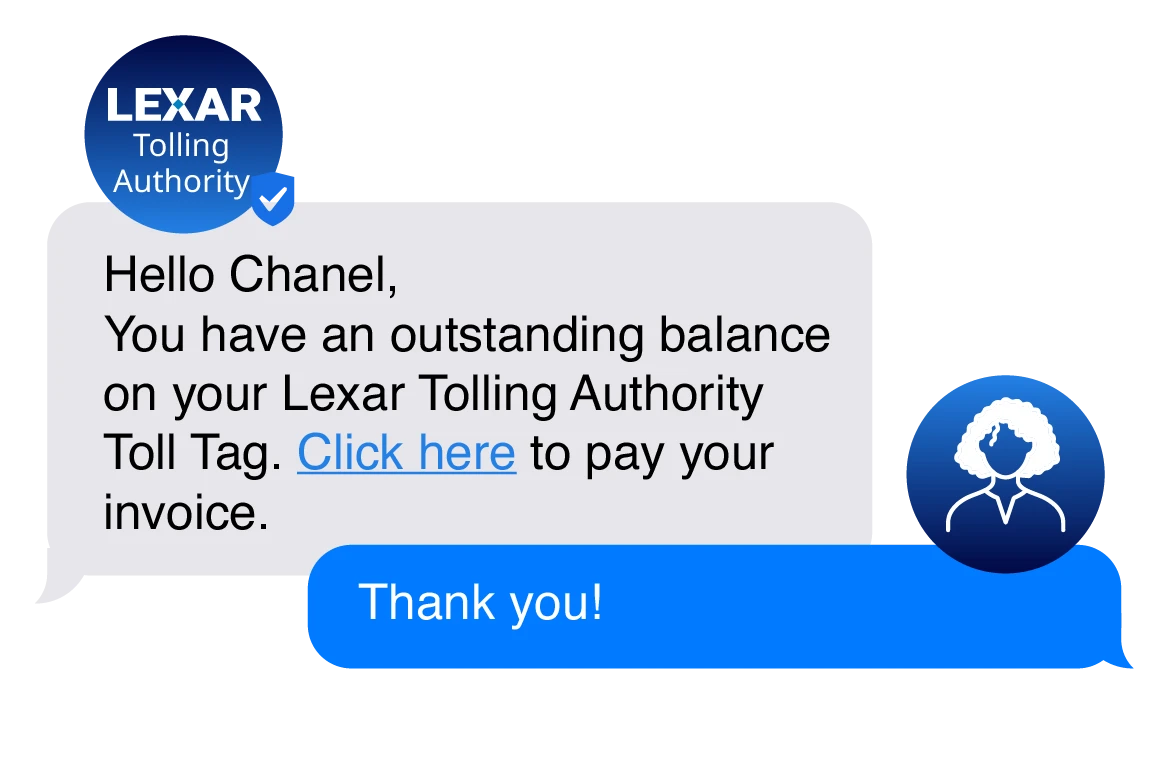
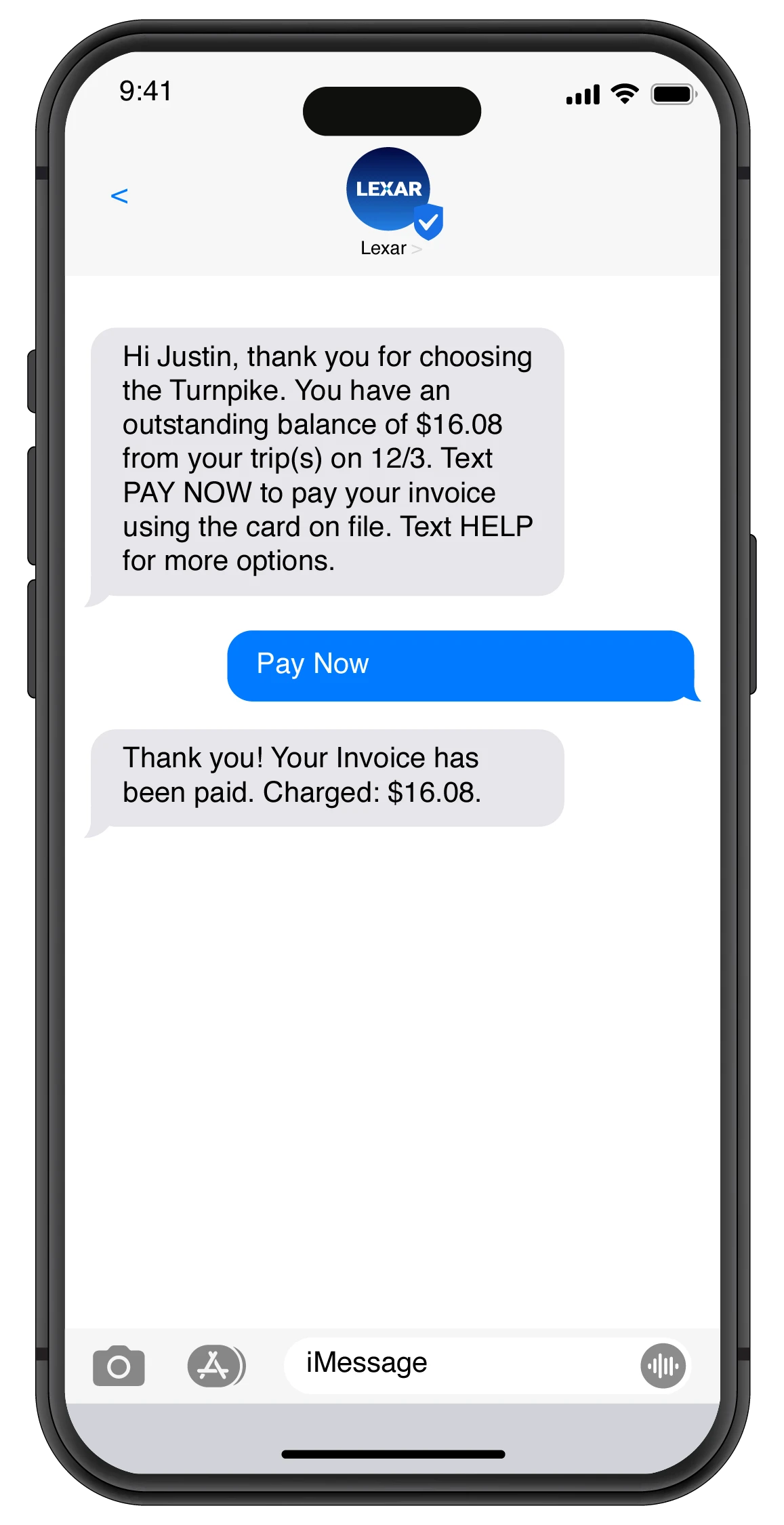
Here are a couple examples of what a verified, branded toll payment notice can look like in a driver’s inbox with RCS:
Verified sender identity
With RCS’ verified sender profiles, toll operators send messages that display the official name, logo, and verification indicators directly in the inbox. These profiles are authenticated through mobile carriers and verified by trusted third-party providers before messages can be sent, ensuring the sender is legitimate. Instead of a generic number, drivers see immediately who the message is from. That visual confirmation removes guesswork in the moment, and it makes RCS especially difficult to spoof.
Guided interactions instead of risky links
Drivers can view balances, review trips, dispute charges, or initiate payment through clearly labeled actions inside the message. What this does is eliminate the behavior drivers are most wary of today—clicking an unfamiliar link—and replaces it with a clearer, more intuitive flow.
Visibility into engagement
RCS also gives organizations richer insight into how their messages perform. Because they can see data on delivery confirmation, read status, and interaction, toll operators get a clearer view of what drivers actually see and do. That added transparency not only helps operators refine messaging strategies over time, it also enables smarter, more fraud-resistant outreach across channels. For example, operators can use engagement insights to better coordinate trusted channels like print, track when messages are opened, and reinforce legitimate payment reminders through verified communications.
Related Post: Safety, Data & the Future of Tolling
Where RCS Makes the Biggest Difference: Real Tolling Payment Scenarios
For toll operators, the real value of RCS payment messaging emerges in the moments where trust matters most: when a driver is being asked to take action.
Pay‑by‑plate first notices: Rather than a plain-text alert, an RCS payment message can display the operator’s verified name and logo, the toll amount due, and the roadway or date associated with the charge. From there, drivers can choose clearly labeled actions like View Trips, Dispute, or Pay Now. The experience feels official, reducing hesitation at the moment a decision is made.
Low‑balance alerts: With RCS, operators can present a branded balance notification paired with a single‑tap Add Funds option. Drivers aren’t forced to interpret a link or navigate away from the message to understand what’s being asked of them.
Payment confirmations and receipts: Instead of a short confirmation text, RCS can deliver a branded receipt with transaction details or supporting documentation. It reassures drivers that the payment went through and makes future messages easier to trust.
For toll operators navigating the fallout from smishing, this is an impactful shift. It makes payment messaging a clear, guided experience that supports faster resolution, fewer calls, and a better experience for both drivers and toll operators.
A Practical Approach: RCS First, SMS Where It Makes Sense
For most toll operators, the question isn’t whether SMS still matters—it does. The challenge is deciding where SMS is sufficient and where it creates unnecessary risk.
A practical model is an RCS‑first strategy for high‑risk, high‑impact workflows, with SMS used intentionally as a fallback when RCS isn’t supported on a driver’s device. This approach balances reach with trust, rather than forcing a one‑channel decision. It can also coordinate with other trusted channels like print statements, email, and toll operator websites.
Prioritize RCS for the moments that require immediate trust, like payment notices, low-balance alerts, disputes, and confirmations. These digital messages can also reinforce and align with other verified communications, such as printed notices or account portals, helping drivers recognize legitimate outreach across channels.
By leading with RCS where trust is most critical, and using SMS and other established channels deliberately elsewhere, operators reduce confusion and keep payments moving.
Restoring Confidence in Digital Toll Payments
Toll smishing isn’t a temporary disruption. It’s a sign that the way toll operators communicate with drivers has changed and that trust can no longer be assumed.
RCS helps toll operators make legitimate notices recognizable and safer to act on, right in the native inbox. If you’re rethinking how you collect payment by message, start by putting RCS on the highest-trust moments.