Braze vs CleverTap (and how CSG Xponent compares)
Compare Braze vs. CleverTap — then see how CSG Xponent goes beyond digital engagement with enterprise-grade journey orchestration across billing, service, and more.
Key takeaways
Braze and CleverTap are both mobile-first customer engagement platforms built for real-time, behavior-driven messaging across channels. The right choice usually comes down to what you are optimizing for: fast, reactive cross-channel messaging versus retention and lifecycle analytics tied to app engagement, along with how much of your customer data and journey logic you want living inside the messaging platform versus in adjacent systems like a CDP, data warehouse, call center, billing, or service platform.
Here you'll see a comparison between Braze and CleverTap. Then you'll see how CSG Xponent, a customer engagement platform built for enterprise complexity, fits when you need journey analytics and orchestration that can complement a messaging platform or coordinate across a broader set of systems depending on your stack.
Choose Braze if your team needs campaign-centric messaging across channels like email, push, SMS, in-app, and web. It is a strong fit for brands that want to react quickly to customer behavior and personalize messages at scale.
Choose CleverTap if your team is focused on retention, app engagement, segmentation, and customer lifetime value. It is especially useful for teams that want analytics and marketing tools in one platform.
Plan for real-world complexity: Both platforms can require meaningful work across identity, consent, event tracking, data quality, governance, and operating model to deliver consistent personalization and cross-channel orchestration at scale.
Consider CSG Xponent if you need journey-level analytics and decisioning that can orchestrate across marketing and non-marketing touchpoints (for example service, billing, and account communications), especially when your customer journey does not live in one tool. CSG works alongside your teams as a true partner, supporting not just platform implementation but the organizational and data readiness that determines how much value you get.
Key features comparison overview: Braze vs. CleverTap
| Capability | Braze | CleverTap |
|---|---|---|
Cross-channel journey orchestration | Included | Included |
Real-time behavioral triggering | Includedcore strength | Includedstrong |
Email, SMS, and push execution | Included | Included |
In-app and mobile messaging | Includednative | Includednative |
Analytics and segmentation | Included | Includedcore strength |
Retention and lifecycle engagement | Included | Includedcore strength |
AI/ML-driven personalization | Included | Included |
App analytics | Included | Includedcore strength |
Enterprise governance and controls | Included | Included |
Reporting and journey analytics | Includedcampaign/journey focus | Includedretention and engagement focus |
Best For | Mobile-first, high-frequency consumer engagement | Retention-focused app and digital engagement |
Compare overlapping key features
Cross-Channel Journey Orchestration
What it is: The ability to plan, automate, and coordinate customer interactions across channels (email, SMS, push, web, in-app, and beyond) based on behavior, preferences, and context.
Why it matters: Most brands can send messages. Fewer can coordinate those messages into a coherent customer experience across channels and over time. Both Braze and CleverTap support cross-channel engagement, but they emphasize slightly different operating models. Braze is often positioned around real-time, cross-channel messaging and responsive engagement, while CleverTap emphasizes retention, analytics, segmentation, and omnichannel engagement together in one platform.
Real-Time Behavioral Triggering and Personalization
What it is: The ability to evaluate customer context at or near the moment of interaction and determine the most relevant message, offer, or action dynamically, rather than relying only on static segments or scheduled campaigns.
Why it matters: Real-time engagement is critical for app-first and digital-first brands. Customers expect communications to reflect what they just did, not what they did last week. Braze is built around real-time, event-driven engagement across channels. CleverTap also supports real-time engagement through user behavior, segmentation, and personalized messaging. CleverTap's Live User Segments, for example, are positioned around tracking what is happening in an app right now so teams can engage users with relevant messages as soon as segments are created.
Analytics and Segmentation
What it is: The ability to understand customer behavior, group users based on actions or attributes, and use those insights to target campaigns more effectively.
Why it matters: Customer engagement is not just about sending more messages. Teams need to understand who is active, who is likely to churn, which users need a nudge, and which campaigns actually improve engagement or business outcomes. CleverTap's platform is especially focused on combining app analytics and marketing, including tracking user actions, segmenting users, running targeted campaigns, and analyzing campaign impact. Braze also supports analytics and segmentation, but is more commonly positioned around real-time, cross-channel engagement and orchestration.
Integration Approach
What it is: How a platform connects to the rest of your stack, including your CRM, CDP, data warehouse, service platforms, commerce systems, and channel execution tools, and how much custom work that connectivity requires.
Why it matters: Braze and CleverTap both need customer data, behavioral events, identity, and consent signals to power personalization and cross-channel campaigns. The more complex your tech stack is, the more important it is to understand how each platform actually connects to your existing systems (not just whether an API or connector exists). Teams should look at how easy the APIs are to work with, how much developer support is needed, how clear the documentation is, who maintains the integration after launch, and whether the vendor supports implementation directly or mainly hands the work off to partners.
Data Foundation Expectations
What it is: The underlying data requirements a platform needs to function effectively: identity resolution, consent handling, event collection, behavioral data, and customer profile quality.
Why it matters: Both platforms can only act on the data they can see and trust. Fragmented identity, incomplete event streams, inconsistent consent records, or disconnected systems will limit what either platform can do, regardless of the capabilities on paper. Understanding these requirements before you buy helps you assess implementation complexity honestly.
Enterprise Controls and Governance
What it is: The administrative and operational controls that let large organizations manage who can build journeys, what requires approval, how brand standards are enforced, and how competing communications across teams are prioritized or suppressed.
Why it matters: In enterprise environments, the risk is not only technical. It is operational. When multiple teams run campaigns across the same customer base, customers can receive too many messages, conflicting communications, or poorly timed offers. Governance capabilities tell you whether a platform is built for the organizational complexity you actually operate in.
Braze Overview
Braze is a customer engagement platform purpose-built for real-time, cross-channel communication. It is most often evaluated by consumer-facing brands and digital-first organizations that depend on mobile, app, web, and product-led experiences to engage customers. Its architecture centers on speed, behavioral data, personalization, and cross-channel execution, making it a strong fit for marketing teams running lifecycle campaigns, onboarding journeys, abandoned cart programs, retention campaigns, loyalty messaging, winback efforts, and personalized promotional offers.
Strengths
Real-time, event-driven engagement at its core: Braze delivers the right message when customer context is right, powering use cases like welcome series, cart reminders, personalized offers after browsing, and churn-prevention nudges.
Native cross-channel execution: Braze supports email, SMS/RCS, mobile, web, global messaging apps, paid media, push, and in-app messaging, so teams can coordinate campaigns across the channels customers use instead of managing each one separately.
Strong mobile and app-centric use cases: For organizations where the app is the primary customer surface, Braze is a natural fit, especially for onboarding, feature adoption, subscription engagement, loyalty updates, and retention messaging.
Weaknesses
Braze needs clean data to work well: Braze's real-time capabilities depend on well-structured event streams, clean identity resolution, consistent consent handling, and reliable customer data.
"There were the issues with the actual events being sent and being tracked in real time in the Braze dashboard. Let's say there was an event that we wanted to send a campaign to… and we didn't originally send it to Braze. Then we'd have to go back to the development team and then have them kind of start over and then send it again later." Senior Director of Marketing, Software Development¹
Learning curve can be steep: Teams often need time, training, and clear ownership to get the most from Braze, especially when coordinating across marketing, product, and engineering.
Enterprise governance is configuration-dependent: Large organizations still need clear rules around message priority, approvals, suppression, and cross-team coordination so customers are not over-messaged.
Best for: Mobile-first and digital-first brands where real-time, behavior-driven campaigns need to launch fast and scale across email, push, in-app, and messaging.
CleverTap Overview
CleverTap is a customer engagement and retention platform that combines app analytics and marketing. It is commonly evaluated by app-first, mobile-first, and digital businesses that want to understand user behavior, segment audiences, run targeted campaigns, and improve retention and customer lifetime value. Marketing and growth teams often use CleverTap for onboarding journeys, activation campaigns, cart abandonment reminders, loyalty engagement, personalized offers, and app engagement across mobile, email, web, push, and in-app channels.
Strengths
Strong engagement and lifecycle focus: CleverTap is built to help marketers proactively engage users through personalized digital campaigns, supporting use cases like onboarding journeys, promotional and offer campaigns, cross-sell and upsell, loyalty engagement, and re-engaging inactive users.
Analytics and segmentation are central to the platform: CleverTap helps teams track user actions, analyze product usage, segment audiences, and measure campaign impact, making it useful for identifying high-value users, targeting at-risk customers, and personalizing offers.
Strong app and mobile use cases: For businesses where mobile engagement, app activity, retention, and LTV are priorities, CleverTap is a natural fit, supporting onboarding, push campaigns, in-app messaging, feature adoption, and subscription renewal reminders.
Real-time segmentation: CleverTap's Live User Segments let teams see what users are doing in the app and engage them in real time, useful for triggering campaigns based on browsing, cart activity, inactivity, or engagement drops.
Weaknesses
CleverTap is only as strong as the data going into it: CleverTap's analytics, segmentation, and retention capabilities depend on reliable app events, identity data, and customer behavior signals.
CleverTap is strongest in app and digital journeys: Enterprises with complex service, billing, account, and operational journeys may still need broader orchestration across systems.
Analytics and user-level visibility may have limits: CleverTap is strong in analytics and segmentation, but some users still point to gaps in usability and access to specific user-level communication data.
"rather complicated" Paola R., Small-Business reviewer on G2 (noted downloading communications for a specific user was an extra feature)
Enterprise governance requires alignment: Like any engagement platform, CleverTap still requires clear rules around message priority, approvals, suppression, ownership, and cross-team coordination.
Best for: App-first and digital-first brands focused on lifecycle engagement, audience segmentation, and personalized omnichannel campaigns, backed by strong app analytics.
How CSG Xponent compares to Braze and CleverTap
Xponent is especially useful for journeys that cross departmental lines—onboarding, billing and payment reminders, service issue communications, cart or application abandonment, retention and winback programs, loyalty engagement, outage or status updates, and next-best-action decisioning. These are the moments where marketing, service, billing, and operations often need to work from the same customer context instead of separate campaign or system views.
| Feature / Capability | Braze | CleverTap | CSG Xponent |
|---|---|---|---|
Journey design and visual orchestration | Included | Included | Included |
Journey-level analytics and path analysis | Includedcampaign focus | Includedengagement and retention focus | Includedcross-system |
Real-time decisioning / next-best action | Included | Included | Included |
Orchestration across non-marketing systems | Limited | Limited | Includeddesigned for this |
Native channel execution (email, SMS, push) | Included | Included | Complements existing tools |
App analytics and segmentation | Included | Includedcore strength | Uses cross-system context |
CRM / CDP integration | API-based | Integration-dependent | Includedheterogeneous stacks |
Enterprise governance and controls | Included | Included | Included |
Complementing existing engagement tools | Possible | Possible | Designed for this |
Implementation partnership model | Vendor + SI partners | Vendor + SI partners | CSG as true partner, platform + readiness |
Best For | Mobile-first, high-frequency consumer brands | Retention-focused app and digital brands | Journey analytics + orchestration across marketing and operational touchpoints |
CSG Xponent Overview
CSG Xponent is a customer engagement platform designed to sit above your existing channel tools, providing a unified view of the customer journey and a central layer for deciding what should happen next across marketing, service, and operational touchpoints.
Xponent can:
Complement Braze or CleverTap by adding journey-level analytics and orchestration across non-marketing touchpoints
Replace parts of a marketing cloud or engagement platform's journey layer when you want centralized decisioning and measurement while keeping existing channel execution tools
Users on G2 also highlight Xponent's ability to support customer journey orchestration and enterprise partnership. As one enterprise financial services G2 reviewer noted, "CSG Xponent makes it easy to build a powerful and professional communication routing environment," enabling "highly relevant customer journeys," while describing the CSG team as "a trusted partner rather than just a vendor."
Key Features and Capabilities
Journey Analytics
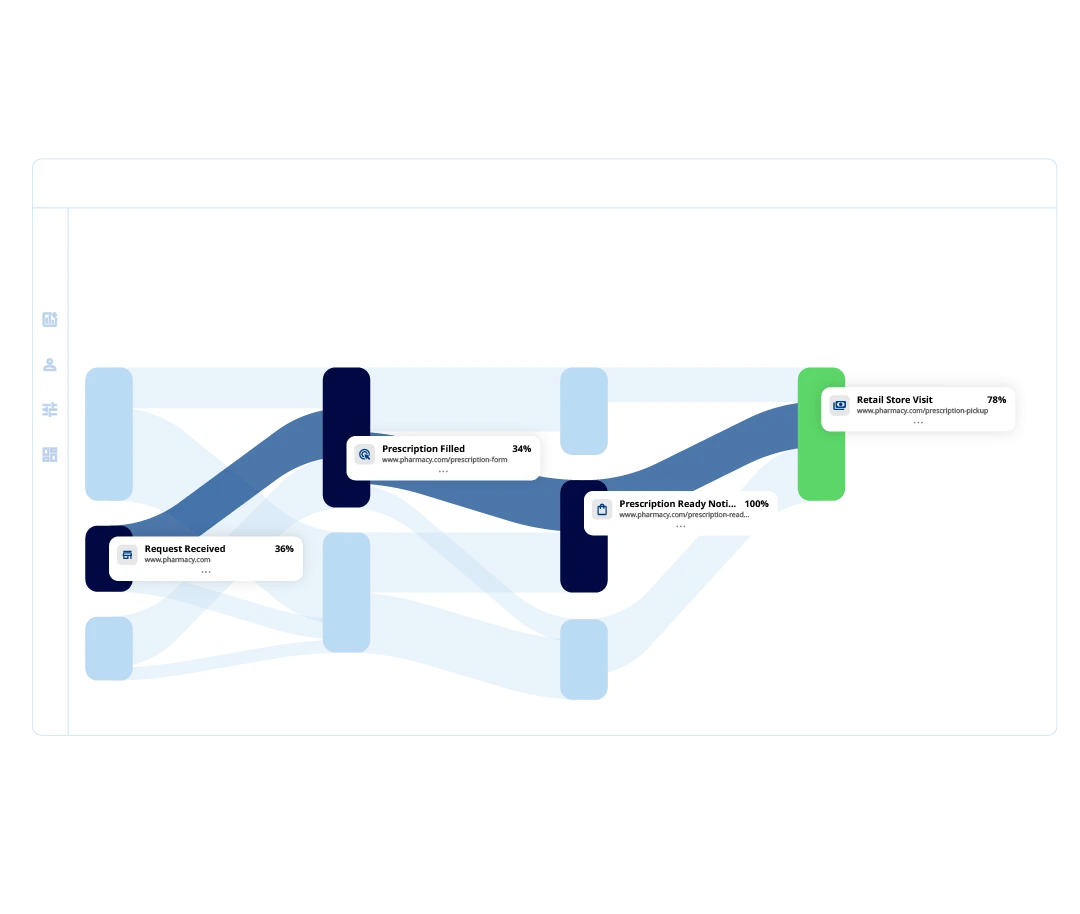
Most reporting tools tell you how a campaign performed. Xponent helps you understand what your customers actually experienced. By measuring journeys across touchpoints rather than within individual channels, you can see where customers are progressing as expected, where they're stalling, and where they're dropping off entirely. That shift from campaign-level reporting to journey-level insight changes the questions your team can ask and the decisions you can make.
Orchestration and Decisioning
Having data about your customers across systems is only valuable if something can act on it. Xponent lets you define the logic for what should happen next at any point in a journey, based on real-time context, business rules, and constraints you set, then pushes those decisions to the execution systems you already have in place. You aren't rerouting all your channel execution through a new platform. You're adding a decisioning layer that makes your existing tools smarter and more coordinated.
Cross-System Coordination
In most large enterprises, customer communications are managed by separate teams using separate tools, each optimizing for their own goals. A customer might receive a promotional offer from marketing the same day they are in an active service issue, or get three messages from different parts of the business in a single afternoon. Xponent addresses this by connecting marketing, service, and operational channels under shared decision logic—reducing noise, protecting the customer relationship, and creating a more coherent experience across every touchpoint.
Governance Support
At enterprise scale, the challenge isn't just deciding what to communicate. It is managing who gets to make that decision, how competing priorities across teams get resolved, and how you ensure communications reflect your standards and strategy. Xponent gives you centralized rules and controls for managing communications across business units, so no message goes out without the right checks in place.
Strengths
Journey-level visibility across systems, not just within a single engagement platform
Real-time engagement visibility without heavy technical dependence: Xponent can help teams troubleshoot and understand customer interactions without always relying on back-end systems.
CSG works alongside your team as a true partner, supporting organizational alignment, data readiness, and decision rule design from day one
Particularly valuable for regulated industries and multi-brand or multi-region environments requiring centralized governance
Limitations
The value of Xponent scales with your organizational readiness. If marketing, service, and operations teams aren't aligned on decision rules and data ownership, the technology won't bridge those gaps on its own. Effectiveness also depends on the quality of your identity resolution and event data. The richer your data foundation, the more Xponent can do with it.
Best for: Enterprises where customer journeys cross departmental lines—where a single interaction might touch a customer engagement platform, a marketing team, a service team, and an operational communications system all operating independently. Also a strong fit for organizations that have already invested in Braze or CleverTap and want to add journey-level coordination and measurement without replacing those tools.
Ready to see how CSG Xponent fits your stack?
If you are evaluating Braze vs CleverTap and want a clear view of where CSG Xponent should complement your stack, request a working session with CSG to map your current journeys, systems, and governance requirements.